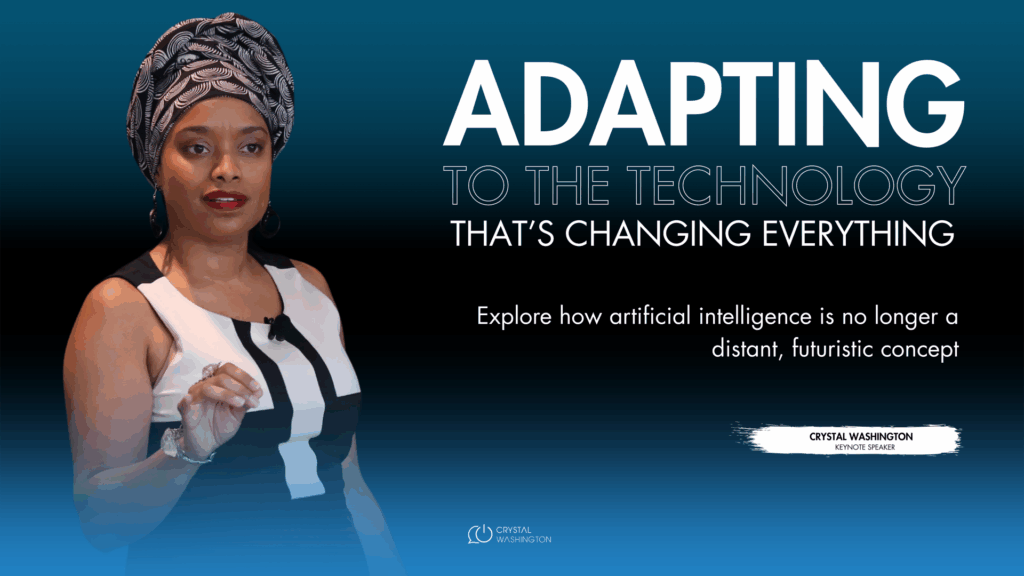

Everywhere we turn, we hear talk of how AI is taking over. Business leaders are scrambling to outdo the competition by adopting the latest artificial intelligence tools first. Meanwhile, countless news sources are decrying the impending “AI bubble,” warning that we’re barreling toward an inevitable collapse. So which is it? Is AI truly taking over, or is it overhyped and destined to go the way of NFTs—yes, those wildly overpriced cartoon apes we all tried to forget?
The job of an AI speaker isn’t simply to rattle off the newest, flashiest tools. Anyone can open an app store or browse a trending list. The fundamental responsibility of an AI speaker is to ensure that what they present is relevant, industry-specific, and grounded in reality. That requires more
than a tech demo—it requires context. Audiences deserve to understand not just what the tools can do, but also what they cannot. They need clarity on the legal, ethical, and compliance
implications of using certain features, especially given that many regulations are still evolving. A good AI speaker demystifies the technology while tempering enthusiasm with caution so that
leaders can make informed decisions rather than reactive ones.
Here’s the truth: AI is not going away. Its capabilities will continue to expand, and its influence will deepen across industries. According to Forbes, the AI market is projected to reach a staggering $1,339 billion by 2030. While there could be an investment bubble, it’s also a signal of fundamental, long-term transformation. The question for leaders is no longer whether they
should consider AI, but how to approach it intelligently.
That’s where an experienced AI speaker becomes invaluable. Beyond inspiration, they help
organizations prepare for what matters: (1) getting data in order and (2) preparing teams for new workflows, new roles, and new expectations. Even before adopting a single tool,
businesses must assess their systems and processes to determine whether integration is even feasible. AI doesn’t fix broken workflows—it magnifies them.
For example, I was recently asked to keynote a group of managers in a B2B industry that relies little on public-facing communication. While AI could support some sales messaging, it became clear that the real opportunities were behind the scenes: inventory management, scheduling, predictive forecasting, robotics programming, and other operational tasks that rarely appear in splashy conversations about AI. The key to AI success isn’t chasing shiny tools—it’s solving real, existing pain points.
In the end, AI isn’t a fad; it’s a force multiplier. Organizations that approach it with clarity,
strategy, and context will lead the next decade. Those who chase the hype will simply be
chasing.